
Stimulating and unconventional takes on the world of work & personal development designed to provoke you into fresh perspectives
Today’s provocation
The superhero leader – or is he?

I made my holiday read a translation of the Odyssey.* It’d been sitting unread on my bookshelf for 30 years and I was determined to form my own opinion before watching the film. Here is one of many thoughts:
Notwithstanding arguments about translations, I couldn’t help reacting against the sanitised version of Odysseus in the film (eg what happened to the maidservants at the end?) and the loss of the aspects of the plot which assume both the reality of the transcendent (the gods are in control at all stages) and the fantastic teamwork in the penultimate chapter.** Instead, it smacks too much of a bland superhero movie in which everything depends on one man’s superhuman heroics.
If ever there were a case for situational leadership, this is it 😉
*EV Rieu (1946) The Odyssey
**Odysseus, Telemachus, Eumaeus and Philoetius
Can you change your personality?
I sometimes have the sense that a client who is new to coaching is secretly hoping that I will help them change their personality. As if their current typical patterns of thinking, feeling and behaving need to be replaced by different ones.
It can be a surprise to introduce the idea of broadening, rather than replacing, the range of responses that the person can draw upon in any given situation.
A recent client reported a strong ability to pick up ‘vibes’ in meetings which are pervaded by politics in the midst of a restructure. This is really useful when navigating the conversation but they are cultivating the ability to dial it down when it becomes paralysing overload.
Recognising that we’re actually seeking adaptivity, rather than ‘change’, of personality can also enable a client to accept and value what’s helpful about their typical pattern rather than automatically labelling it as a problem in all contexts. To find out more, check out Claudia Hammond’s latest ‘All in the Mind’ podcast below.
Recommended further listening: BBC Radio 4 ‘All in the Mind’ Can you change your personality? 30 June 2026 https://www.bbc.co.uk/programmes/m002ybb2
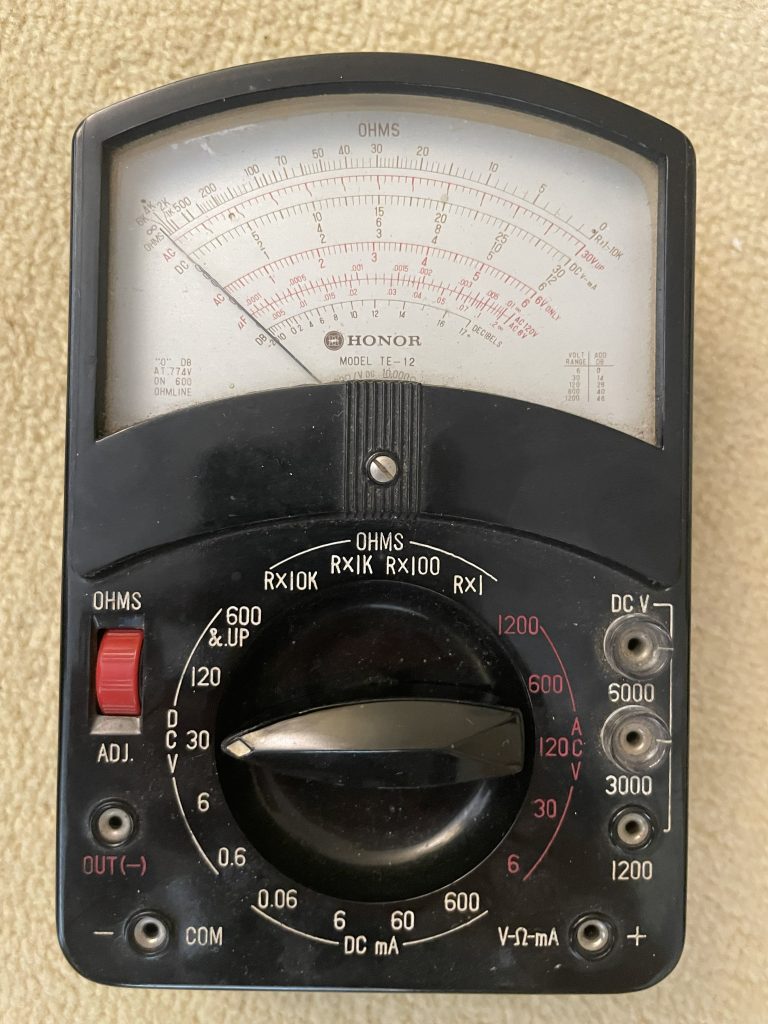
Multimeter kindly provided by Hamilton Flowservices Museum Collection
Don’t do it!
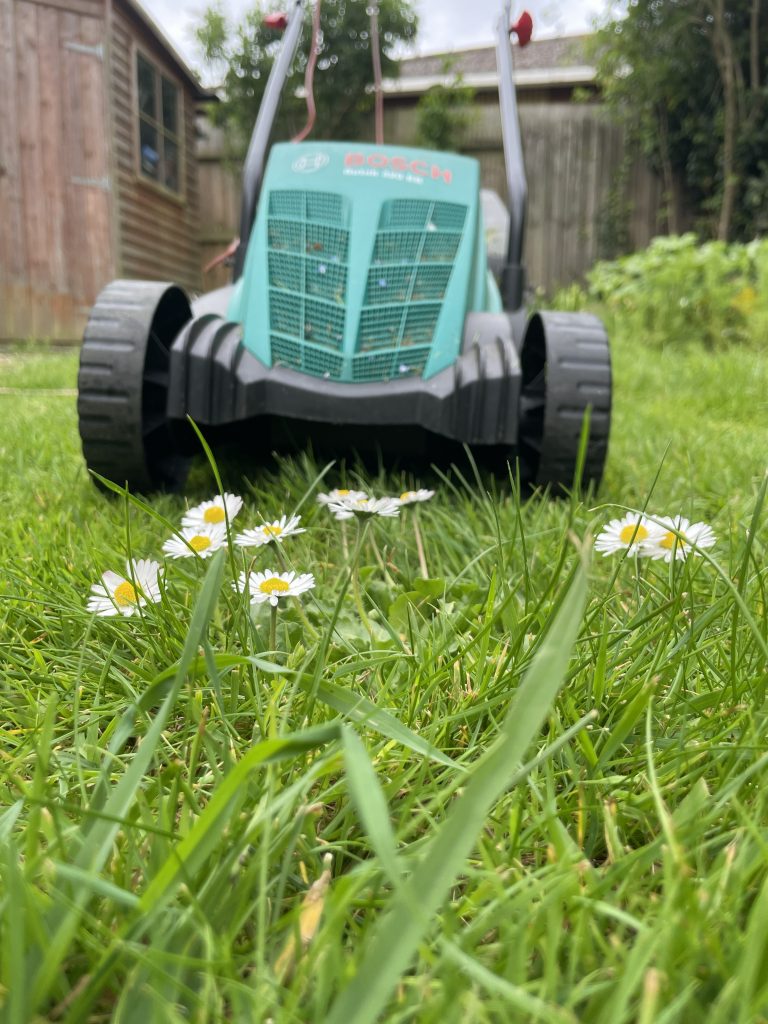
I nearly mowed down some daisies last week in my hurry to get on. The act of pausing, deciding and mowing round them produced in me a rush of exhilaration from this tiny act of rebellion. It was a vote for what seemed important.
It reminds me of the experience of a client yesterday who described himself as ‘the conductor of an orchestra which couldn’t keep up’. This referred to what was going on inside his head as well as with others.
We practised slowing down, protecting pauses and noticing physical sensations.
The experience was almost intolerable and deeply uncomfortable.
It’s the sort of thing that becomes possible when accompanied by a trusted partner. It delighted, but didn’t surprise, me when there followed an expansive awareness of possibilities and perspectives which had hitherto been completely hidden.
Rather like some daisies unfolding and appearing right in front of us.
Beware! Role model alert!
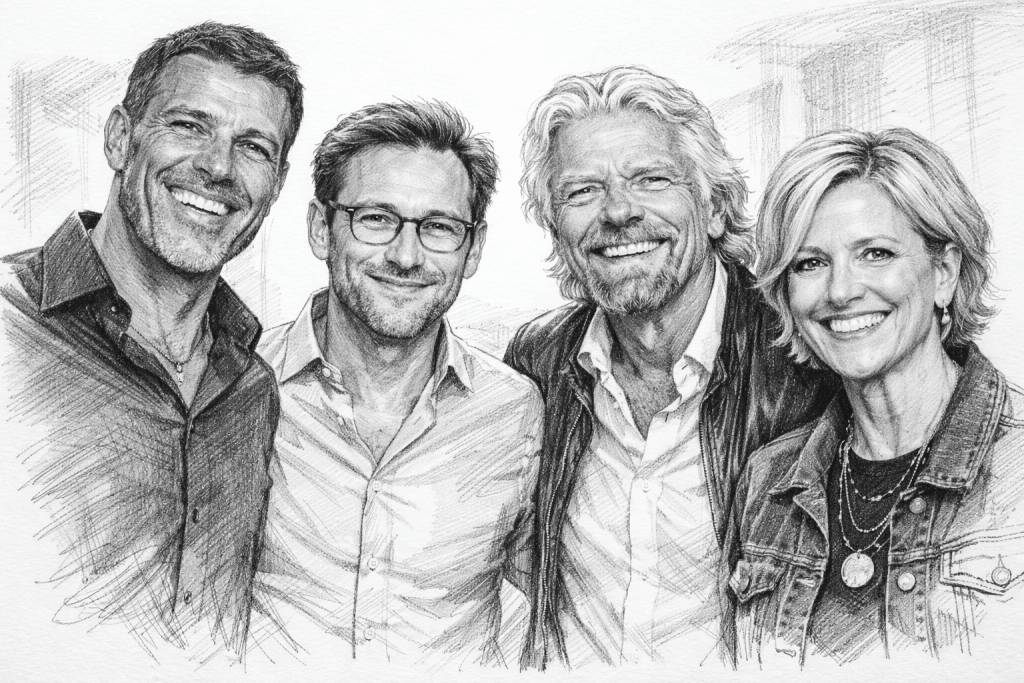
Recently a client pointed out that, in a quest to become great at speaking in front of audiences large and small, he had studied business people who are outstanding at delivering a high impact message. In our work together, however, he has come to realise that these high profile communicators are operating at a standard which he will not meet and doesn’t actually need to attain.
Moreover, we noted that we know very little about the other skills and qualities which are needed for these role models to be outstanding (or even good enough) at their respective roles. Communicating with impact is about developing personal presence first and this is not charisma. Part of this is about ‘owning’ your particular style and working on the parts which may get in the way of your message.
I find sometimes that the very attributes which a person feels they need to ditch contain the seed of something distinctive, maybe a bit quirky, which is both impactful and memorable when embraced and developed intentionally.
Talking ‘live’ is a radical act

Eat your heart out, Nancy Kline*.
In conversation with a senior executive client this week we unpacked the personal power of the leader who picks up the phone for a brief call, even if it’s just a ‘Go ahead, you can do this!’ permission or encouragement.
In part thanks to advances in technology, the leader who communicates ‘live’ has a positive impact way beyond the obvious content of the message.
Calling someone live and spontaneously says ‘You matter’ and ‘I am a real person with a voice and a personality’.
The skill to be learned might be how to keep calls brief but for senior leaders the surprise of the recipient might be sufficient to avert long discussions. At least that’s what my client found. In our follow up today he’d already called (instead of emailing) four more junior people – to their surprise and, hopefully, delight.
Why not give it a try?
*’Thinking for yourself is a radical act.’ Nancy Kline, Time to Think (1999)
The (not so) secret to being a better leader
‘There’s no way I’d have time for reflection during my day’ was one person’s somewhat scoffing reaction to a suggestion of occasionally putting 5 minutes on a timer and writing notes on, ‘How did people experience me this morning? What does this say about me as a leader?’. A few heads nodded in agreement round the table.
Within the same discussion that same person argued for offsite leadership training as their preferred means of development as a leader.
Why is it still so counter-cultural to suggest structured moments of reflection during an executive’s day when the evidence* points so clearly towards self reflection as a primary lever of leadership effectiveness? Maybe part of the role of coaching is to provide support and accountability whilst it’s practised until it’s embedded.
*one example among many: Kpakol, A and Zeb-Obipi (2017) Emotional reflexivity and Leader Effectiveness IOSR Journal of Business and Management 19/3, pp60-68
Nestling and what it tells us

This weekend I found myself looking in wonder at a newborn baby. Without hesitation she is following her natural instincts to eat, sleep, nestle and excrete with relentless regularity. So many of we adults are looking to regain a way of being which satisfies our basic needs.
Maybe our recent preoccupation with gut health is part of this?!
It’s nestling I’m pondering about.
The adult version of nestling frequently appears in coaching in the form of Attachment Needs to feel safe, to feel valued and to belong. I observe that the drive to get these fundamental needs met can be a clue to behaviours which can interfere with a professional’s effectiveness at work. Next time you’re disturbed or puzzled about your behaviour at work, why not ask yourself, ‘Am I feeling safe, valued and as if I belong?’. Is one of these a clue to your actions in that moment?
Welcome shame

Last week, whilst on a very early morning walk, I greeted an unremarkable looking older lady. I approached her briskly whilst she was emptying something into a bin and then we passed each other. The scene puzzled me and, on my return, I glanced at the bin contents as I passed. This is what I saw. I don’t know the story behind this person’s action but the word ‘shame’ came into my mind along with a feeling of compassion for this lady.
In working with clients I sometimes notice a confusion between guilt and shame. This is nothing new. More controversially, perhaps, I find that they often think of shame as wholly negative and something they ‘shouldn’t’ feel. Personally, I am a fan of appropriate shame. It’s a loud hailer to my conscience that something needs to be done. And some remarkable conversations have come out of sharing this view invitationally within a trusting and kind coaching context.
Active silence

Have you met professionals who seem to rely disproportionately on their considerable language and reasoning skills to navigate their lives and work?
I have loved working with many lawyers and research scientists over recent years and have noticed the freedom they experience from bringing their creative sides to their coaching journeys.
And occasionally this involves choosing a topic of enquiry and sitting with it together without talking. Recently, I spent over 35 minutes of a coaching session with a legal professional in silence. It wasn’t planned. It was their choice as to whether or not to speak. It was clear from the range of body language we shared that important work was being done.
The power of accompanying someone through painful transitions, career and personal. Some have called it the theology of ‘being there’.
Credit: Banksy (2004) Barcode Leopard
No conductor?

An orchestra with no conductor??
Yes, this is the Orpheus Chamber Orchestra. Founded in 1972. No conductor. Having many talented musicians among my friends I know that the status, style and personality of a conductor is instrumental, from interpretation of the music to a unified performance. How do Orpheus do it?
They say it starts with direct communication and open mindedness within the orchestra. And outside? It’s down to the quality of relationships they have with their many partners, from composers to up-and-coming soloists.
Shared leadership isn’t for every context but it is happening across many sectors from construction to healthcare. And it starts with a team that is willing to communicate directly and be open minded. How do your team rate on these qualities? At Clennam we offer an emergent team coaching approach which can be ideal for deepening and broadening real direct communication. How about a direct conversation to find out more?

Rooaaaring with laughter
We take a lot of things seriously that we used not to – and rightly so. It’s not infrequent for a client in their 40s to come to coaching armed with a recent diagnosis which has given them reassurance that they are not alone and the hope of some ways of thinking and working which will be helpful. Coaching can work really well because it doesn’t pathologise – it recognises and builds on what is already present.
Today I found myself laughing with one of these clients from a place of deep despair at the rigidity and critical spirit of one of her colleagues. She is going to ask her 8 year old son to choose a favourite dinosaur which she will imagine she sees as she walks into her colleague’s office, which she does several times a day.

Why am I more tired in online vs face to face meetings?
Produced at the height of the pandemic, Nadler’s research on ‘Zoom fatigue’ is my ‘go to’ research for normalising coachees’ experiences of being more exhausted by Zoom than by meeting in person.
Simply put, our brains have to work harder to create a convincing 3D person when we are experiencing them in 2D. So, part of our brain attention is occupied with making a real human being out of what is in front of us.
The solution? Meet up in person or communicate verbally without camera.

Don’t believe the headlines
‘Piano Man Hits the High Note with Success at 88’
I think it’s absolutely wonderful that Ray Eveleigh has passed his grade 8 piano with distinction. However, when I heard that headline I thought – wow, that’s incredible! And of course, it is. It’s also important to note the following contextual factors:
- He’s been playing the piano all his life
- He had the encouragement of his wife and daughter
- He had the time and the health to do this
If you’re contemplating an ambitious goal in your life, make sure you have the resources around you which will set you up for success and the motivation to put the time in.